

ACT Book of the Year
>>2025 >> About the ACT Book of the Year
Winner
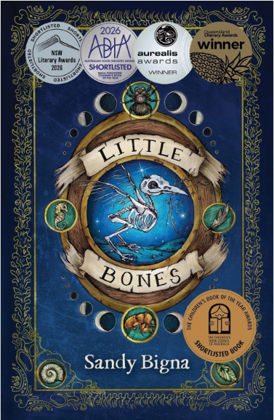 | Sandy Bigna Little Bones University of Queensland Press | 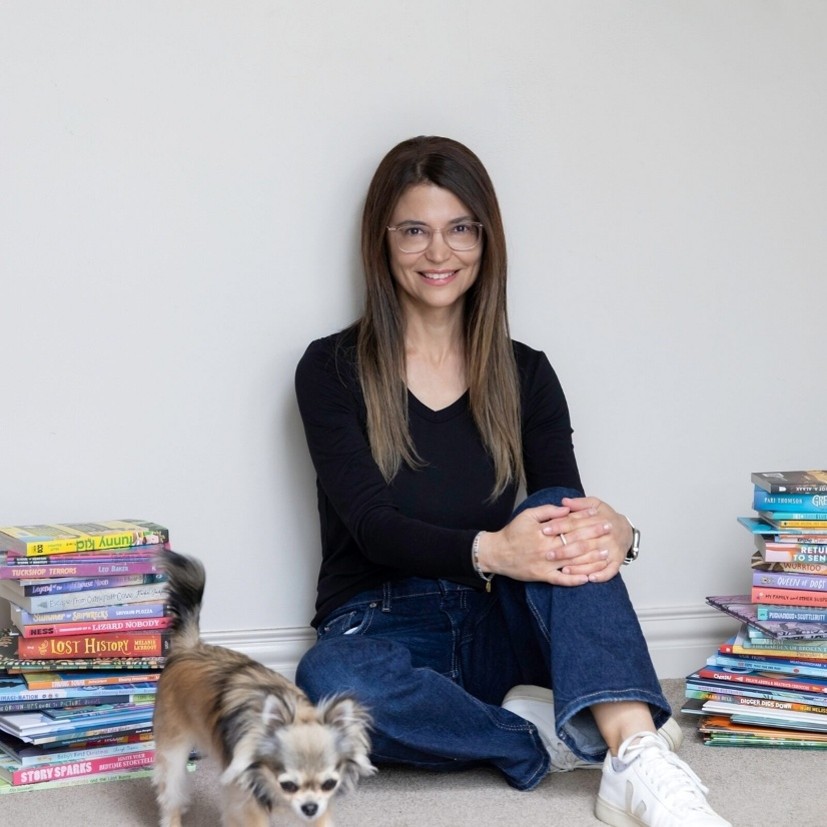 |
JUDGES' CITATION
Little Bones is a tender, poetic and assured work that transcends age categories to offer a profound meditation on grief, friendship and healing. Judges unanimously praised the book as a standout achievement, describing it as a work of remarkable elegance and restraint that leaves a lasting emotional impression long after the final page.
Through spare yet deeply evocative prose, the author demonstrates an extraordinary confidence of voice. Judges highlighted the precision of the writing, noting that every word feels purposeful and considered. The book's distinctive blend of magic realism, embodied through the haunting and memorable skeleton bird, creates a powerful framework for exploring loss and the difficult process of learning to let go.
The work was celebrated for the maturity and sensitivity with which it addresses complex themes. It treats readers as equal partners in the journey, gently holding them within the story while never becoming didactic or patronising. Themes of difference, identity and belonging are woven naturally throughout the narrative, enriching rather than overwhelming the emotional core of the work.
Judges were equally moved by the interplay between text and illustration, praising the artwork as every bit as poignant and expressive as the words themselves. Accessible to readers of all ages while retaining considerable literary depth, Little Bones stands as a remarkable debut and a significant contribution to contemporary Australian literature. It is a work of quiet beauty, emotional intelligence and enduring resonance.
SYNOPSIS
Since the accident, eleven-year-old Bones spends her time drawing animal skeletons and scavenging for dead things to add to her collection. She’s drifted away from her friends and doesn’t want to make new ones.
One night, Bones wishes on a full moon and unintentionally resurrects the skeleton of a baby bird. Bird wants to return to his natural (dead) state, so Bones agrees to reverse the curse – not that she knows how. As she and Bird work out the secrets of the magic, Bones remembers what it’s like to have a friend. How can she let Bird go when she doesn’t want to say goodbye?
ABOUT THE AUTHOR
Sandy Bigna is a passionate supporter of local children’s literature. She started up the Aussie Kids Books Instagram, which reviews Australian children’s and YA books. She has studied children’s literature at the University of Canberra and worked as a children’s librarian in a public library. She has been awarded two Varuna Residential Fellowships and her YA manuscript Exposed was shortlisted for the HarperCollins Australia Matilda Children’s Literature Prize in 2020. Little Bones is her debut novel.
Highly Commended
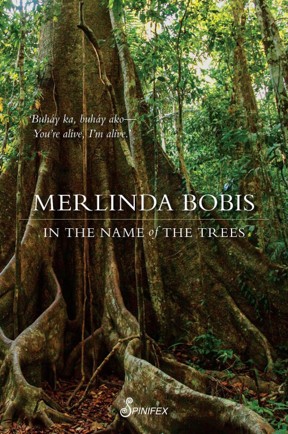 | Merlinda Bobis In the Name of the Trees Spinifex Press | 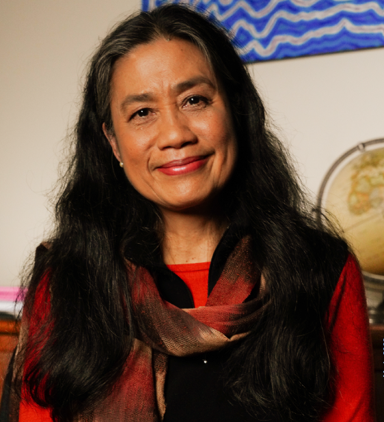 |
JUDGES' CITATION
In the Name of the Trees is a richly layered and deeply moving novel that explores memory, heritage, resilience and the enduring relationship between people, land and story. Judges praised the work for its sophisticated structure and emotional depth, describing it as a novel that rewards careful reading and lingers long after its conclusion.
At the heart of the novel, trees stand as witnesses, storytellers and custodians of generations of lived experience. Through a beautifully braided narrative, the author interweaves the lives of multiple women across time, revealing buried histories and long-held truths with remarkable discipline and care. The healing ritual that anchors the work serves as both narrative spine and emotional centre, bringing together themes of family, colonisation, loss and renewal.
Judges were particularly struck by the author's bold literary choices, including the use of Indigenous languages without translation. Rather than creating distance, this approach enriches the reading experience, allowing readers to immerse themselves in place, culture and rhythm while challenging assumptions about whose stories are centred and how they are told.
Lyrical, evocative and profoundly humane, In the Name of the Trees offers a compelling vision of a world in which stories are carried not only by people but also by the land itself. It is a work of considerable artistry that speaks powerfully to themes of continuity, survival and belonging.
SYNOPSIS
In a Philippine ritual of retrieval, Lola Narra tries to heal her granddaughter Dao who was paralysed in an accident that killed her father. They live in Canberra, far from the healing trees of their first home in the village of Iláwod where the story began. But between the Philippines and Australia, the land knows, the trees know: wound on wound on wound—lugad sa lugad sa lugad. Such is the colonial inheritance of four generations of Filipinas named after trees: Banaba, Narra, Pili and Dao. Their rifts are deep, their heartbreaks more wounding. They tell stories to hide, evade, or make truth bearable. But trees remember. They do not lie.
ABOUT THE AUTHOR
Dr. Merlinda Bobis is a trilingual Filipino-Australian writer, performer, and scholar. Her creative and critical works explore issues on gender, environment, migration, borders, memory, language, ethics and care, and decoloniality. She published 4 novels, 6 poetry books, 2 collections of short stories, a monograph of lectures on creative research and had 10 dramatic works performed internationally. She also published numerous literary works in anthologies, journals and magazines. Influenced by Philippine ways of ‘feeling-thinking-doing’, her scholarly articles emerge from grassroots theorising and creative-critical empathy. She developed and facilitated community arts and advocacy projects on environment, resilience of women and girls, migration and language, and cross-cultural engagement. Her works were shortlisted in the ACT Book of the Year Awards in 2018 and Highly Commended in 2022.
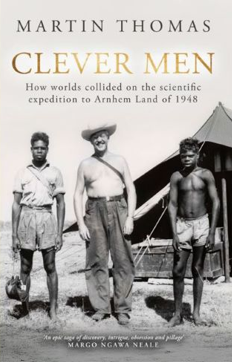 | Martin Thomas Clever Men : How worlds collided on the scientific expedition to Arnhem Land of 1948 Allen & Unwin |  |
JUDGES' CITATION
Clever Men is a meticulously researched and masterfully written work of history that challenges established narratives while illuminating a vital chapter of Australia's cultural story. Judges described it as an important act of truth-telling, distinguished by its intellectual rigour, narrative strength and profound respect for First Nations knowledge systems.
Through expansive archival research and decades of engagement with communities and historical records, the author re-examines a significant anthropological expedition and its lasting consequences. What emerges is a compelling account of cultural encounter, misunderstanding and resilience, one that continually shifts the lens away from colonial assumptions and towards the sophistication, generosity and depth of Indigenous knowledge.
Despite the complexity of its subject matter, judges praised the book's accessibility and narrative momentum. The work balances scholarship with storytelling, moving seamlessly between historical investigation, oral history and contemporary reflection. At times surprising, shocking and even darkly humorous, it remains consistently engaging while tackling issues of repatriation, cultural ownership and historical accountability.
The judges noted the book's relevance well beyond Australia, particularly through its exploration of the return of cultural materials and ancestors to their communities. Ambitious, thought-provoking and deeply moving, Clever Men stands as a significant contribution to Australian historical writing and contemporary conversations about truth, memory and justice.
SYNOPSIS
'Here was I with the status of little more than a telephone mechanic, taking out the biggest scientific expedition in history'
In this way the legendary Charles Mountford immodestly described his biggest assignment: to lead an expedition of American and Australian scientists to Arnhem Land in northern Australia, investigating traditional Aboriginal life and the tropical environment. Backed by National Geographic, the Smithsonian Institution, and the Australian government, it was also a display of the friendship between Australia and the US.
But the adventure turned out to be anything but friendly. In this compelling account, award-winning historian Martin Thomas tells how they set out with fanfare in 1948 and how quickly the expedition turned toxic. Thomas uncovers the secrets, scandals, and unlikely achievements. He also reveals how Indigenous communities, including the elders known as 'clever men', dealt with the intrusion of these foreign 'experts'.
Drawing on years of collaborative research with Arnhem Land communities, Clever Men is a poignant portrayal of colliding worlds. In this encounter between scientific hubris and the world's oldest surviving cultures, Thomas finds a story of global significance and profound long-term impacts.
ABOUT THE AUTHOR
Martin Thomas is a Professor of History at ANU and an award-winning researcher, essayist, oral historian, and filmmaker, his work is driven by a deep interest in the meaning of landscapes, the legacies of colonisation, and the drama of cross-cultural encounter. He directed and co-produced a documentary film Etched in Bone. His book The Many Worlds of R. H. Mathews won the National Biography Award.
Shortlist
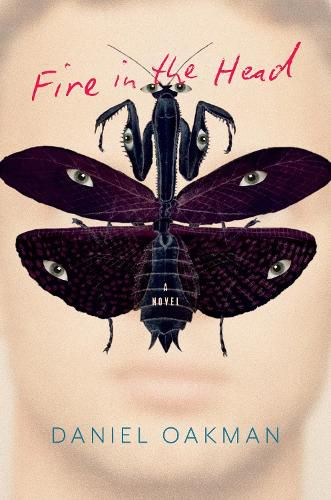 | Daniel Oakman Fire in the Head Upswell Publishing | 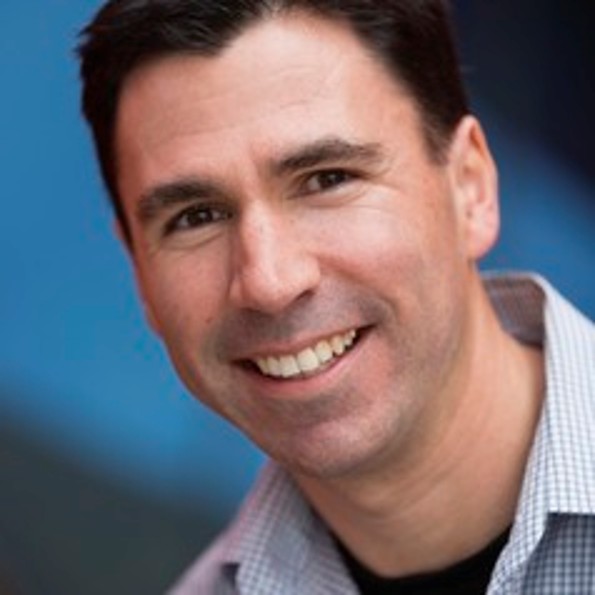 |
JUDGES' CITATION
Fire in the Head is an unflinching and deeply authentic novel that confronts trauma, survival and the pursuit of justice with honesty and compassion. Judges praised the work for its emotional intelligence, rhythmic prose and refusal to simplify difficult experiences.
Blending elements of coming-of-age fiction, memory, legal drama and personal reckoning, the novel explores the long shadow of childhood abuse and the complex realities faced by survivors. Judges were particularly struck by the authenticity of the voice and the skill with which the author captures both emotional truth and the intricacies of the justice system.
While confronting in subject matter, the work never becomes gratuitous. Instead, it balances moments of profound difficulty with reflection, tenderness and humanity. The vivid depiction of Canberra provides a distinctive local dimension, grounding the narrative within recognisable landscapes and communities.
Powerful, necessary and thoughtfully crafted, Fire in the Head is a novel that invites important conversations while demonstrating the transformative potential of fiction to illuminate lived experience.
SYNOPSIS
Part crime drama, part coming-of-age tale, part modern psychological odyssey, Oakman's novel is a gripping, unsettling and powerful story about self-discovery, the importance of friendship and the transcendent power of words. Fire in the Head addresses a deep taboo in Australian society- the legacy of child sexual abuse and what victims must endure to bring perpetrators to justice.
In March 1999, twenty-seven-year-old James Harper, a shy public servant living in Canberra, is called to a police station to provide evidence on the suicide of his youngest sister nine years earlier. As the investigation gets underway, James confesses that he had been abused by his stepfather, Martin Jenkins, when he was a child. Could the two events be connected? But as he dives headfirst into the legal system in a quest for justice, James must face some disturbing truths about himself and the past he thought he had left behind.
ABOUT THE AUTHOR
Daniel Oakman, a writer and historian, In 2005, his ground-breaking history of Australia and the Colombo Plan, Facing Asia (published by Pandanus Books), was shortlisted for the NSW History Awards. With Melbourne Books he has published Oppy (2018), an acclaimed biography of the sporting icon and politician Hubert Opperman, and Wild Ride (2020), an immersive exploration of how the bicycle has long shaped understandings of the Australian continent and its people. Fire in the Head is his debut novel. Daniel's other writing has appeared in diverse publications, including Mountain Biking Australia, VeloNews, Australian Historical Studies, The Big Issue and Meanjin.
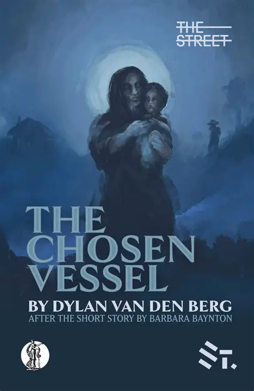 | Dylan Van Den Berg The Chosen Vessel Currency Press | 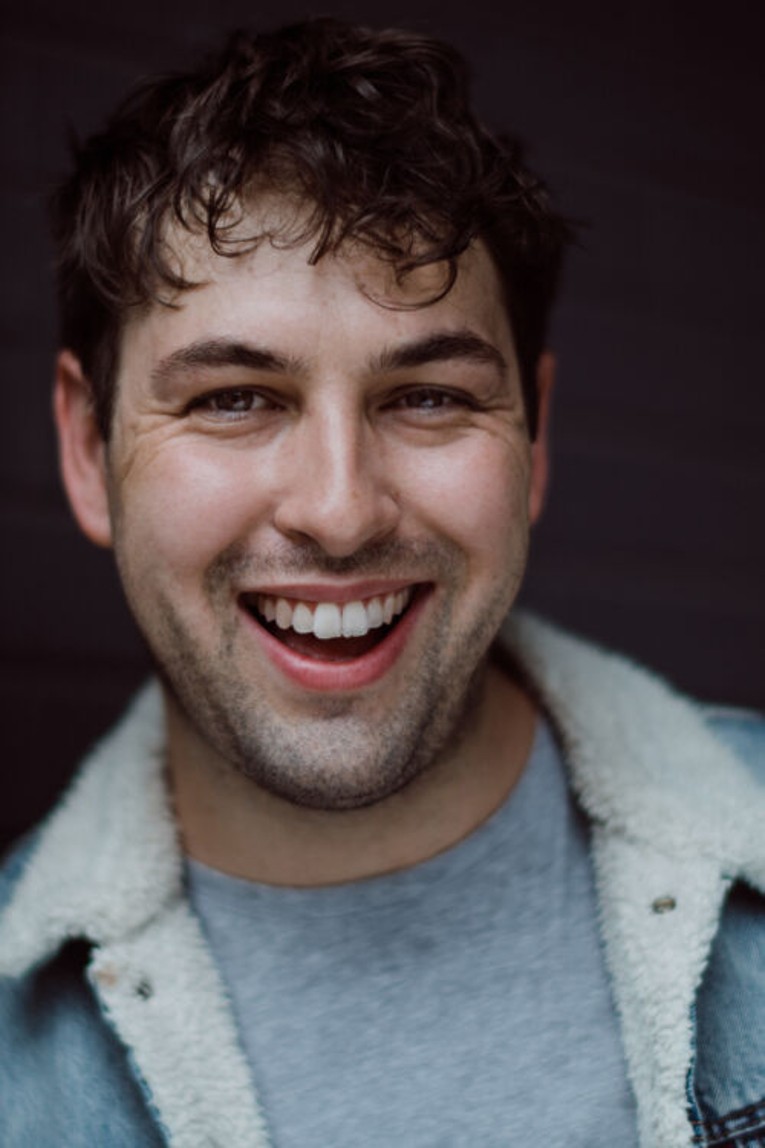 |
JUDGES' CITATION
The Chosen Vessel is a powerful and haunting reimagining of a literary classic that transforms a familiar narrative through a First Nations perspective. Judges described the work as an extraordinary achievement in contemporary playwriting, one that unsettles, challenges and profoundly moves its audience.
Drawing upon the tradition of Aboriginal Gothic, the play shifts the gaze away from the landscape as a source of danger and towards the forces of colonisation and dispossession. Through spare, precise language and expertly sustained tension, the work constructs an atmosphere that is both unsettling and emotionally resonant.
Judges praised the complexity and humanity of its characters and the strength of its dialogue, noting the remarkable emotional force achieved through restraint rather than excess. The figure of the ghost emerges as a powerful act of truth-telling, carrying themes of motherhood, country, memory and resistance across generations.
Bold, original and deeply affecting, The Chosen Vessel demonstrates the transformative possibilities of adaptation and stands as a significant contribution to contemporary Australian theatre and literature.
SYNOPSIS
'I thought about trickin' him, about givin' him an idea of where I might be - usin' my voice.'
A young Aboriginal woman—made a mother against her will—lives in the bush, cocooned by Country she understands and trusts. When a Swagman arrives, seeking food and water, her fears about the white 'ghosts' who occupy the land unfurl as a horrifying reality. From award-winning Palawa playwright, Dylan Van Den Berg (Milk, Whitefella Yella Tree, Way Back When), comes an Aboriginal Gothic Horror and bold adaptation – a radical reimagining of Barbara Baynton's 'The Chosen Vessel'. This alternate version of Baynton's classic Australian story provokes us to reflect on what we choose to see – and what we wilfully ignore.
ABOUT THE AUTHOR
Dylan Van Den Berg is a Palawa man, actor and writer based in Canberra. He graduated from ANU with a Bachelor of Arts (Drama) and trained in acting at the State University of New York, the Upright Citizens Brigade improvisation troupe (NYC) and the Canberra Youth Theatre senior ensemble. He is the winner of the 2021 Nick Enright Prize for Playwriting at the NSW Premiers Literary Awards and the 2020 Griffin Award for new Australian playwriting for his play: way back when.
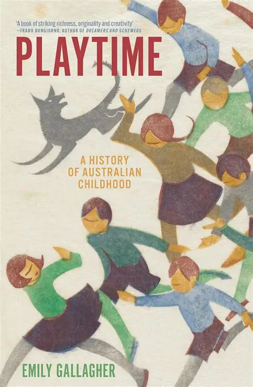 | Emily Gallagher Playtime : A History of Australian Childhood Black Inc. | 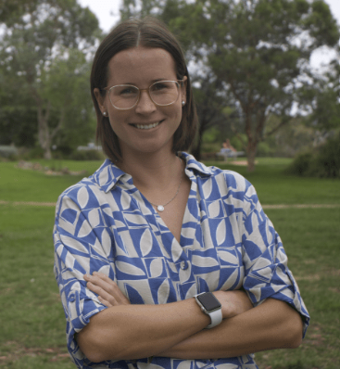 |
JUDGES' CITATION
Playtime is an engaging and insightful work of history that re-examines Australia's past through the experiences, creativity and imaginations of children. Judges praised the book for uncovering voices often absent from historical records and presenting them in a manner that is both scholarly and highly accessible.
Drawing upon an impressive range of archival sources, the author reveals how children shaped and were shaped by the social, cultural and technological changes of their time. The skilful integration of primary materials creates an immersive reading experience that enriches our understanding of nationhood, identity and everyday life.
Judges highlighted the book's exploration of play as a serious and powerful cultural force. From children's engagement with war, aviation and technological change to the evolution of consumer culture and notions of belonging, the work demonstrates how play reflects broader social transformations while helping children process and respond to the world around them.
Thoughtful, original and richly researched, Playtime offers a fresh perspective on Australian history while championing the enduring importance of imagination, creativity and childhood experience.
SYNOPSIS
This groundbreaking book is a history of children's play and imagination in Australia between 1890 and the Second World War. It is a story about the generations that grew up at a time when nation and empire were being reimagined amid the globalising currents of war, technology and trade. Theirs were faces that would remain forever young in monochrome film, and whose thoughts and dreams would be preserved between the timeless blue lines of the modern school exercise book.
Playtime is built around six imaginative worlds – amateur journalism, bird loving, war and adventure, dolls, the future, and monsters and fairies. It brings these worlds, and the voices of children, to life, exploring an incredible array of children's artefacts and seeing the social history of Australia through a new lens.
ABOUT THE AUTHOR
Emily is a historian in the National Centre of Biography. She initially trained as a teacher in Sydney before completing her PhD in Australian History in the School of History at the ANU, where she now works as a research editor for the Australian Dictionary of Biography. She is also a research fellow on an Australian Research Council funded project on the history of grandparenting in Australia. Though Emily’s research interests are wide-ranging, her expertise is in the history of childhood and youth. Playtime: A History of Australian Childhood is based on her award-winning PhD research.
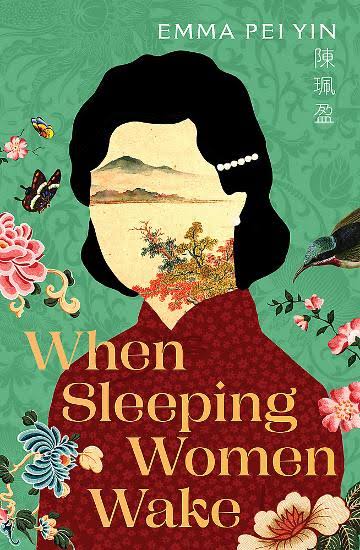 | Emma Pei Yin When Sleeping Women Wake Hachette Australia |  |
JUDGES' CITATION
When Sleeping Women Wake is an ambitious and compelling historical novel that explores resilience, identity and the enduring impact of conflict through the experiences of women navigating extraordinary circumstances. Judges praised the work for its strong storytelling, broad appeal and confident handling of complex historical themes.
Set against the backdrop of war, occupation and social upheaval, the novel centres the voices of women whose stories have often been overlooked. Through vivid settings and carefully structured narrative threads, it examines the personal costs of colonisation, displacement and survival while celebrating courage, resistance and self-determination.
Judges commended the novel's accessibility and pace, noting its ability to engage a wide readership while bringing lesser-known histories to contemporary audiences. The work's focus on women's experiences and Asian perspectives contributes meaningfully to Australia's evolving literary landscape.
A promising and accomplished debut, When Sleeping Women Wake offers an important contribution to historical fiction and demonstrates a talented new voice with significant potential.
SYNOPSIS
An epic and emotional story of three spirited women - a mother, her daughter, their maid - during the Japanese occupation of Hong Kong
1941. The wealthy Tang family has settled in Hong Kong after fleeing Shanghai. As the First Wife of the family, Mingzhu leads a glamorous but lonely existence - mothering the son of her husband's concubine, overseeing her daughter Qiang's education, and directing their household of servants, including her long-time confidante, Biyu.
When the Japanese invade the island, the three women's paths wildly diverge. Mingzhu's affinity for languages spares her physical labour but she's coerced into serving an enemy captain. Qiang and Biyu suffer brutal factory work and food rations until an encounter with the East River Column Resistance fighters separates them. As war rages around them, each woman holds onto the hope that the others are alive. Can they fight for their freedom and still find their way back to each other?
ABOUT THE AUTHOR
Emma Pei Yin is an Australian-Chinese writer, editor and literary advocate. Her debut novel, When Sleeping Women Wake, has been published internationally and translated into multiple languages. The novel was longlisted for the ARA Historical Novel Prize (2025) and won the Australian Indie Book Awards in the Debut Fiction category (2026). Emma is the founder of yinfluence, an agency supporting PoC, queer and neurodivergent writers by connecting them with editors and mentors who understand the stakes of telling stories from the margins.She is an Author Advocate for Room to Read and an Ambassador for Chapters for Change.
>> 2025 >> 2024 >>2023 >> 2022 >> 2021 >>2020 >>2019 >>2018 >> 2017 >>2016>>2015>>2014>>2013 >>2012>> 2011>>2010>>2009 >>2008 >>2007 >>2006 >>2005 >>2004 >>2003 >>2002 >>2001 >>2000 >>1999 >>1998 >>1997 >>1996 >>1995 >>1994 >>1993